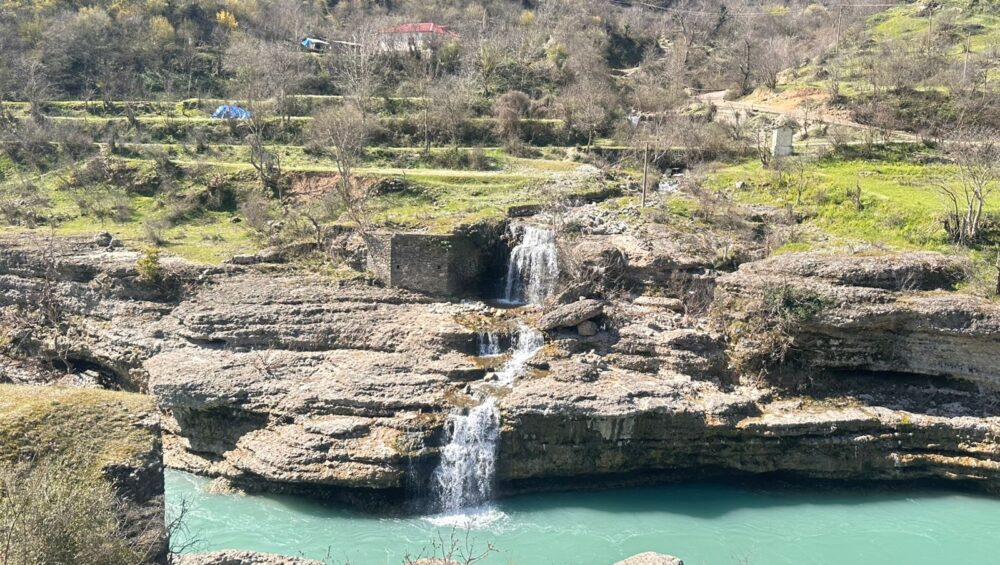
How much water is being taken from our rivers, and what does this mean for their ecosystems?
Following the training conducted within the framework of the Vjosa–Aoós 2.0 project, the River Guardians have completed their field monitoring, focusing on identifying and documenting water abstraction and diversion across the Vjosa river basin.
During the monitoring activities, the River Guardians applied the knowledge acquired during their training, collecting data on interventions related to water use and documenting conditions on the ground.
Water abstraction for agriculture, water supply or other purposes, when not managed sustainably, can affect natural flow regimes, alter aquatic habitats and threaten the biodiversity that depends on them. These pressures become particularly significant during periods of low river flow.
The data collected during the monitoring activities will be organised and analysed to provide a clearer understanding of water abstraction pressures across the Vjosa river basin. The findings will serve as a basis for discussions with local communities and responsible authorities, while also contributing to the assessment of the implementation of the Vjosa Wild River National Park Integrated Management Plan.
The involvement of local communities represents an important step towards a participatory approach to National Park management, in which residents are not merely witnesses to environmental changes but active contributors to their documentation and mitigation.
Protecting the Vjosa as a free-flowing river also means preserving its natural flow regime. Continuous monitoring is essential to understanding the pressures affecting the river and informing the measures needed to safeguard it.
The activity was carried out within the framework of the Vjosa–Aoós 2.0 project, in cooperation with EuroNatur and MedINA, with financial support from the Donors’ Initiative for Mediterranean Freshwater Ecosystems (DIMFE).


