EcoAlbania is launching a new initiative aimed at restoring degraded riverbanks along the Buna River in Shkodër through the use of nature-based solutions and ecological engineering techniques.
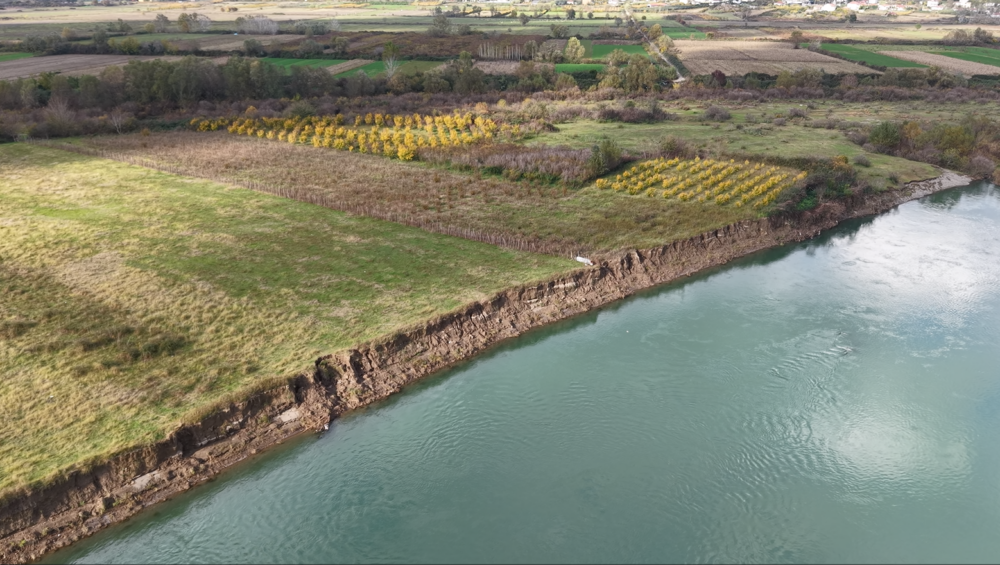
The “Restoration of Buna River Banks with Plant Engineering” project will focus on a section of the Buna River affected by ongoing erosion, where the gradual loss of riparian land is putting pressure on both natural habitats and areas used by local communities.
The Buna River is one of Albania’s most important wetland ecosystems, connecting Lake Shkodra with the Adriatic Sea and forming a dynamic river and delta landscape rich in wetlands, floodplains and riparian habitats. At the same time, changes in land use and river dynamics have increased erosion pressures in certain sections of the river.
Working with nature to restore the riverbank
Rather than relying primarily on conventional hard-engineering solutions, the project will explore a combination of nature-based solutions and plant-engineering techniques to stabilise the riverbank while maintaining the river’s natural ecological functions.
The planned intervention will use locally available vegetation, particularly willow, through techniques such as live fascines, cuttings and brush-layering. These measures are designed to strengthen the riverbank as vegetation becomes established, reduce erosion and gradually restore a more diverse riparian habitat.
Where necessary, limited earthworks will be used to prepare the riverbank for restoration, while keeping conventional engineering interventions to a minimum.
The project will also assess the possibility of improving the connection between the Buna and a secondary river branch. Restoring this connection could contribute to greater habitat diversity and improve the ecological and hydrological functioning of the area. Any intervention will be developed in consideration of local conditions, land uses and the needs of the people who depend on the area.
Bringing local knowledge into restoration
An important part of the project will be cooperation with local communities and institutions. Farmers and other users of the riverbank will be consulted throughout the process, while collaboration with local authorities and other relevant stakeholders will help ensure that the restoration measures respond to both ecological and local needs.
The project will also create opportunities for young people to learn more about ecological river restoration and practical plant-engineering techniques. Through training and participation in field activities, the initiative aims to strengthen local knowledge and build capacity for the long-term care of restored riverbanks.
Beyond the physical restoration of the site, the project therefore seeks to demonstrate how river management can work with natural processes rather than against them — protecting biodiversity while also strengthening the resilience of the communities living alongside the river.
The project is part of the broader effort by the Mediterranean Biodiversity Consortium to empower grassroots organisations through its Call for Small Projects, supported by the French Global Environment Facility (FFEM), the MAVA Foundation, and the French Development Agency (AFD).


