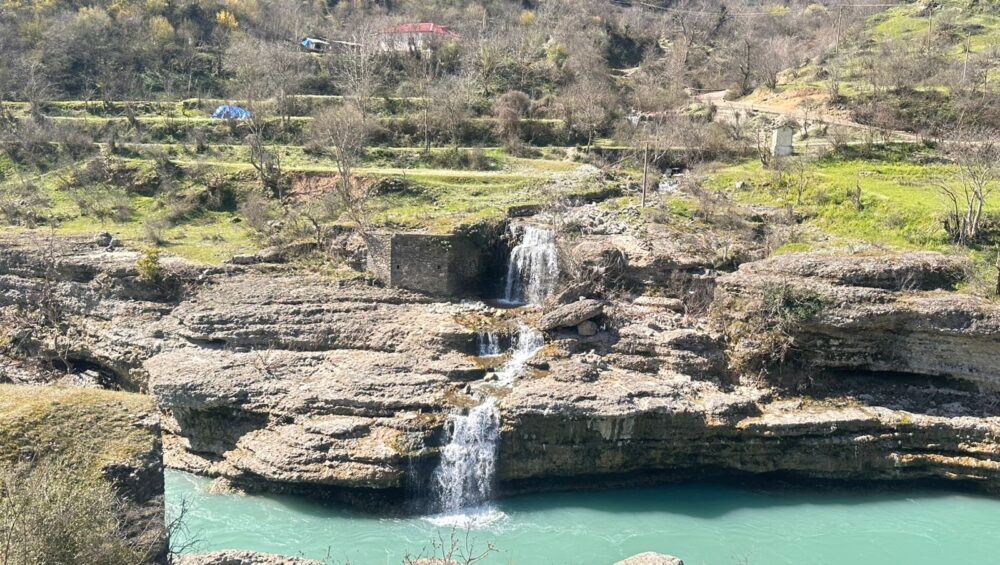
EcoAlbania has completed the field monitoring of river barriers across the Vjosa River basin, an important step in the implementation of the project “Breaking Barriers: Small Dams Removal Planning in the Vjosa River.”
The monitoring focused particularly on the Vjosa’s smaller tributaries, where information on existing barriers remains limited. While the Vjosa itself remains free-flowing, a number of its tributaries are fragmented by small dams, weirs, culverts, fords and other structures that can interrupt river connectivity, sediment transport and the movement of aquatic species.
Through on-site assessments, the EcoAlbania team worked to identify and document these structures and collect the information needed to better understand their current condition, function and potential impact on the river ecosystem. The field monitoring complements existing information on irrigation dams and addresses an important knowledge gap regarding smaller and often undocumented barriers within the basin.
The data collected during the monitoring will now contribute to the development of a geo-referenced database and interactive map of barriers in the Vjosa basin. Each identified structure will be further assessed according to criteria including its ecological impact, current functionality, cultural and historical relevance, and potential safety risks.
The next phase of the project will focus on analysing the collected data and identifying barriers that could potentially be removed. Based on technical, ecological and legal considerations, the project aims to develop a shortlist of up to five priority barriers whose removal could provide significant benefits for river connectivity and ecosystem restoration.
By building a clearer picture of the barriers affecting the Vjosa and its tributaries, this work lays the groundwork for future restoration actions and supports the long-term protection of the ecological integrity of the Vjosa Wild River National Park.
The project “Breaking Barriers: Small Dams Removal Planning in the Vjosa River” is supported by the Open Rivers Programme.


