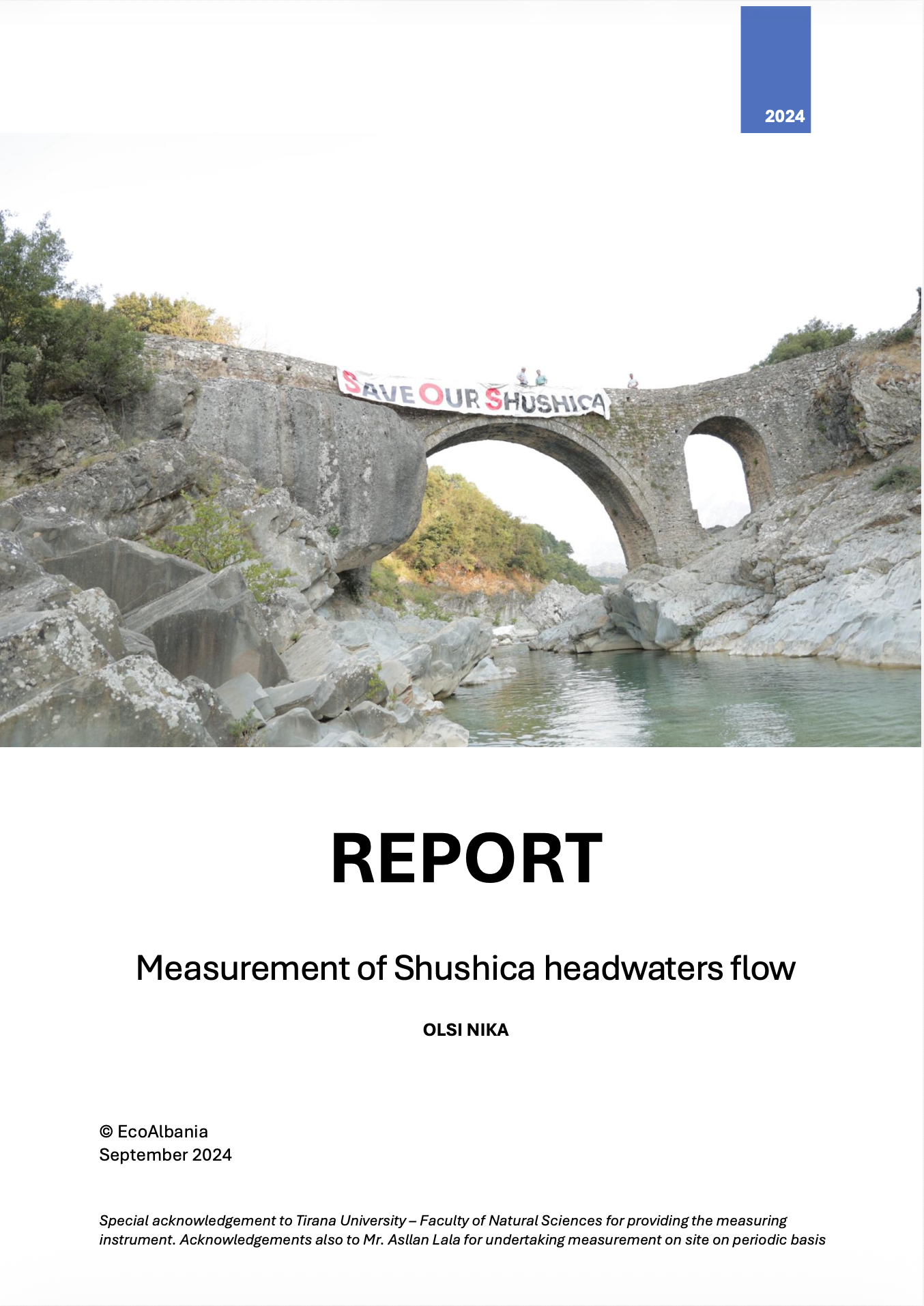
This assessment analyzes the current water flow in the headwaters of the Shushica River and evaluates the potential ecological impacts of the planned diversion for the Himara water supply system.
Measurements were conducted at four monitoring stations along the first 6 kilometers of the river during July–August 2024, using the Velocity-Area method. The data indicate a significant decline in water flow over this period, with levels in some cases dropping by two to three times.
A key finding is the disruption of the natural connection between the Shushica and the Vjosa rivers, caused by existing water abstraction schemes for irrigation. During certain periods, no water flows in the natural riverbed. The planned diversion at the source is expected to further exacerbate this situation and prolong the ecological disconnection.
The study highlights the importance of maintaining ecological flow, especially as the area is part of the Vjosa Wild River National Park. However, due to the limited monitoring period, extending data collection into the driest months (September–November) is recommended to better assess long-term impacts.